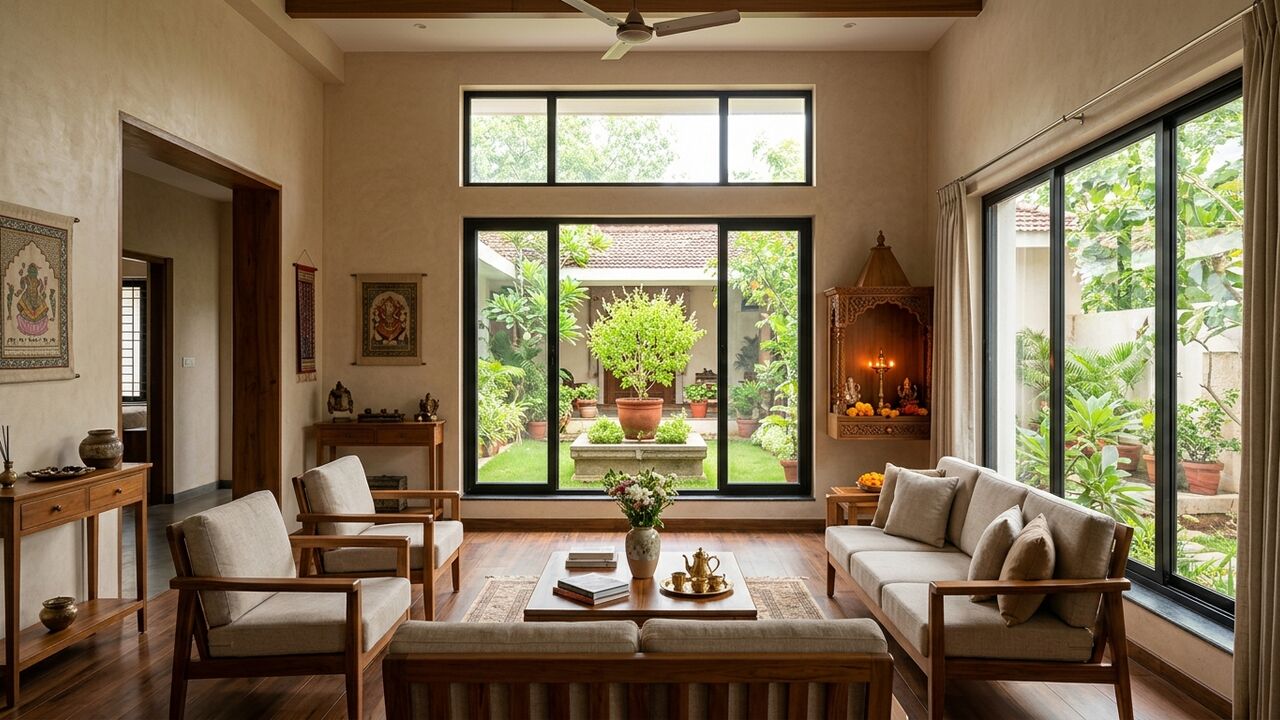
Renovation is harder than new construction because the building answers back. A thirty-year-old house in Cuttack or a 2005 Bhubaneswar duplex has hidden wiring, a plaster history, damp that has found its own path and a family that has to keep living inside while work happens. This guide lays out how we assess, sequence and price a renovation in Odisha, and where the money is best spent.
Start with an honest assessment, not a mood board
Before we discuss colours we spend half a day with a moisture meter, a torch and a screwdriver. The assessment covers the things a renovation must fix even if nobody asked for them:
- Damp and seepage: stains below bathrooms, salt efflorescence on ground-floor walls, peeling paint on the windward side. In coastal homes we check whether the RCC cover has spalled and reinforcement is rusting.
- Termites: door frames, wardrobe backs, wooden lofts and the gap behind kitchen cabinets. Odisha's termite pressure means most houses older than fifteen years without treatment have some.
- Electrical: aluminium wiring, a single circuit for the whole floor, no earthing, an MCB board that trips when the geyser and AC run together.
- Plumbing: galvanised iron pipes that have narrowed with scale, old cast-iron drainage, a sump that has never been cleaned.
- Structure: cracks that are cosmetic versus cracks that are moving, sagging chajjas, a staircase slab with exposed steel.
- Roof: terrace waterproofing age, blocked outlets, parapet cracks.
The report from this visit becomes the difference between 'must do', 'should do' and 'nice to do', which is how a renovation budget is actually built.
Common renovation projects in Odisha and what they involve
| Project | What is really involved | Indicative 2026 cost |
|---|---|---|
| Bathroom rebuild | Strip to screed, new waterproofing with ponding test, CPVC and UPVC lines, new slope, tiles, fittings, exhaust | ₹1.2 – 2.5 lakh per bathroom |
| Kitchen remodel with civil | Platform rebuild, chimney duct, new water and drain points, rewiring for appliances, wall tiling, then modular units | ₹3 – 7 lakh including modular kitchen |
| Whole-house rewiring | New conduits where possible, copper FR wiring, separate circuits for AC and kitchen, earthing pits, inverter loop, modular switches | ₹180 – 300 per sq ft of built-up area |
| Damp treatment and repainting | Source repair (roof, plumbing or plinth), removal of loose plaster, waterproof plaster, primer and paint | ₹60 – 120 per sq ft of affected wall |
| Layout change (removing a wall, adding a toilet) | Structural check, beam if load-bearing, new drainage with slope, flooring patch that matches | ₹1.5 – 4 lakh depending on scope |
| Elevation refresh | Crack repair, new chajjas or louvers, texture bands, exterior paint, facade lighting | ₹2 – 6 lakh for a G+1 |
| Full renovation with interiors | All of the above plus false ceiling, wardrobes, kitchen and lighting | ₹900 – 1,800 per sq ft |
All figures are indicative and Odisha-wide; Bhubaneswar labour runs a little higher, Jajpur and Sambalpur a little lower. For comparison against building new, see our construction cost guide.
The sequence that avoids doing things twice
- Structural and civil repair first. Cracks, spalled concrete, wall openings and any new beam. This is the noisy, dusty phase; get it done in one go. Our civil construction team handles this scope.
- Waterproofing and plumbing. Roof, bathrooms, kitchen wet wall. New water lines and drainage before any floor is closed.
- Electrical rough-in. Conduits, boxes, AC and inverter points laid against the new furniture layout so nothing is cut later. This is the step most renovations skip and regret; see our electrical and plumbing planning guide.
- Plaster, floor and tile. Including matching or replacing old flooring; note that a 1990s 12-inch tile cannot be matched, so plan a full-room replacement or a deliberate border.
- Doors, windows, grills. UPVC or aluminium replacements are a big comfort upgrade in coastal and dusty areas.
- False ceiling and carpentry. Then modular units, which arrive from the factory only after site measurements post-tiling.
- Paint, lights, fittings, deep clean. Last, always.
Compressing this order to finish faster is how a freshly painted wall gets a chase cut for an AC point two weeks later.
Odisha-specific problems and the fixes that last
Rising damp on ground floors
Common in old Cuttack and in Jajpur homes on low plinths. The lasting fix is a chemical damp-proof course injected at plinth level plus waterproof re-plaster to 1 m; simply repainting with 'damp-proof' paint lasts one monsoon.
Rusting reinforcement in coastal homes
Chip back to sound concrete, clean and treat the steel with a rust converter and zinc-rich primer, then polymer-modified repair mortar. Cover the repaired zone with a protective coating. We see this on balconies and chajjas in Puri, Paradip and Balasore constantly.
Termite-damaged frames
Replace with WPC or treated Sal frames, treat the soil around the plinth and drill-and-inject the affected walls. Replacing the door alone invites the termites back to the new one.
Undersized water systems
Old homes have 500 L tanks and half-inch lines. A renovation is the moment to upsize the overhead tank, add a sump with a pump, and plan for a borewell in areas with summer supply cuts.
Power cuts and modern loads
Rewire with a dedicated inverter circuit for fans, lights and Wi-Fi, and leave a conduit to the roof for future solar. Load calculation should include ACs, an induction hob and an electric geyser per bathroom.
Renovating a flat versus an independent house
Apartments in Bhubaneswar and Cuttack come with society rules: work hours, debris disposal, no changes to external elevation or shared shafts, and often a refundable deposit. Wet areas can rarely be relocated because the drainage runs through the slab into a common stack. Renovation in a flat is therefore mostly finishes, wiring, bathrooms in place and furniture, and the sequencing has to respect neighbours below. Our small apartment design guide shows what is possible within those limits.
An independent house gives freedom but also full responsibility for the roof, the plinth and the compound. Adding a floor to a family house is a common request in Jajpur and Sambalpur; it is possible only if the original footings and columns were designed for it, which usually means a structural engineer's assessment and sometimes strengthening. Renovating an older house is also the right time to review its floor plan for elders, ventilation and a possible rental floor.
Living through a renovation
Most of our renovation clients stay in the house. That shapes the plan: we phase work floor by floor or zone by zone, seal off the work area with plastic sheeting, schedule the dustiest work when the family is at office or school, and keep one bathroom and a temporary kitchen point working at all times. A typical full renovation of a G+1 takes 3–5 months; a single bathroom takes 3–4 weeks; a rewire of an occupied house takes 2–3 weeks per floor. We time terrace and exterior work for October to May, and keep monsoon months for interior trades.
Agree the rules before day one: working hours, who receives materials, where debris is stacked, and how change requests are priced. A renovation without a written scope drifts; every open wall suggests one more improvement. Our turnkey process uses a signed scope and a weekly site report to keep the drift visible and decided, not accidental.
Where to spend and where to hold back
If the budget is tight, spend on what you cannot see: waterproofing, wiring, plumbing and structural repair. These are the items that decide whether the visible finishes survive. Then spend on the kitchen and bathrooms, which affect daily life most. Hold back on decorative panelling, elaborate false ceilings and imported fittings until the shell is sound. A well-renovated house in Odisha should not need another civil intervention for fifteen years; if that is true, the laminate colour is the least important decision you made.
Key takeaways
- Begin with a technical assessment of damp, termites, wiring, plumbing, structure and roof; it defines the real scope.
- Sequence civil repair, waterproofing, plumbing and electrical before any finish; never the other way round.
- Odisha's lasting fixes: injected damp-proof course, proper RCC repair for rusted steel, WPC or treated frames, upsized water and inverter systems.
- Flats have shaft and society constraints; independent houses need structural assessment before adding floors.
- Phase work so the family can live in, and agree scope, hours and change pricing in writing.
- Spend first on what you cannot see, then on kitchen and bathrooms, and last on decoration.
Frequently asked questions
How much does home renovation cost in Odisha?
Indicatively ₹900 to ₹1,800 per sq ft for a full renovation with interiors, ₹1.2 to 2.5 lakh per bathroom rebuild and ₹180 to 300 per sq ft for complete rewiring; a written assessment is needed for a real number.
Can I stay in the house during renovation?
Usually yes with phased work, sealed zones and one working bathroom and kitchen point at all times; full-house structural work is easier if the family can move out for a few weeks.
How do you fix damp walls permanently?
Find and repair the source (roof, plumbing or plinth), inject a chemical damp-proof course where rising damp exists, re-plaster with waterproof mortar and only then paint.
Can a floor be added to my old house?
Only if the existing footings and columns can carry it; a structural engineer must assess the building, and strengthening may be required before adding a floor.
Is it better to renovate or rebuild?
If structure is sound and the layout works, renovation is cheaper; if foundations, RCC and layout are all poor, rebuilding often costs little more and gives a house designed for the next forty years.
How long does a full renovation take?
Typically 3 to 5 months for a G+1 with interiors, 3 to 4 weeks for a bathroom, and 2 to 3 weeks per floor for rewiring an occupied house.
Prefer to see it first? Visit the MoGhara experience centre at Panikoili, Jajpur (open daily 9 am – 9 pm) to touch and compare kitchens, wardrobes, finishes and materials before you decide.
Talk to MoGhara about your project in Odisha
Thinking of renovating a family home in Odisha? Book a MoGhara assessment visit and get a must-do, should-do and nice-to-do list with indicative costs before you decide anything.